


Spring 2024Computer Vision, ML Model, Front-end
Refract
A cloaking model that protects your face from deepfakes.
Deepfake abuse does not only happen to celebrities. Refract adds invisible pixels to your photos, but disruptive to deepfake models trying to learn your likeness after scraping online.
- Role
- Design lead and front-end, in a team of five
- Tech stack
- Python, Hugging Face, TypeScript, React
- Outcome
- 2nd place, Annual Data Science Competition @ UCSB
- Links
- Source on GitHub
01 First approach
Random noise doesn't cut. We need to attack the embeddings.
We started by adding random noise. However, random pixel-level distortion is trivial for a training pipeline to average out, so it protects nothing.
Deepfake models work from facial feature embeddings, the numbers that encode what makes your face yours.
02 Method
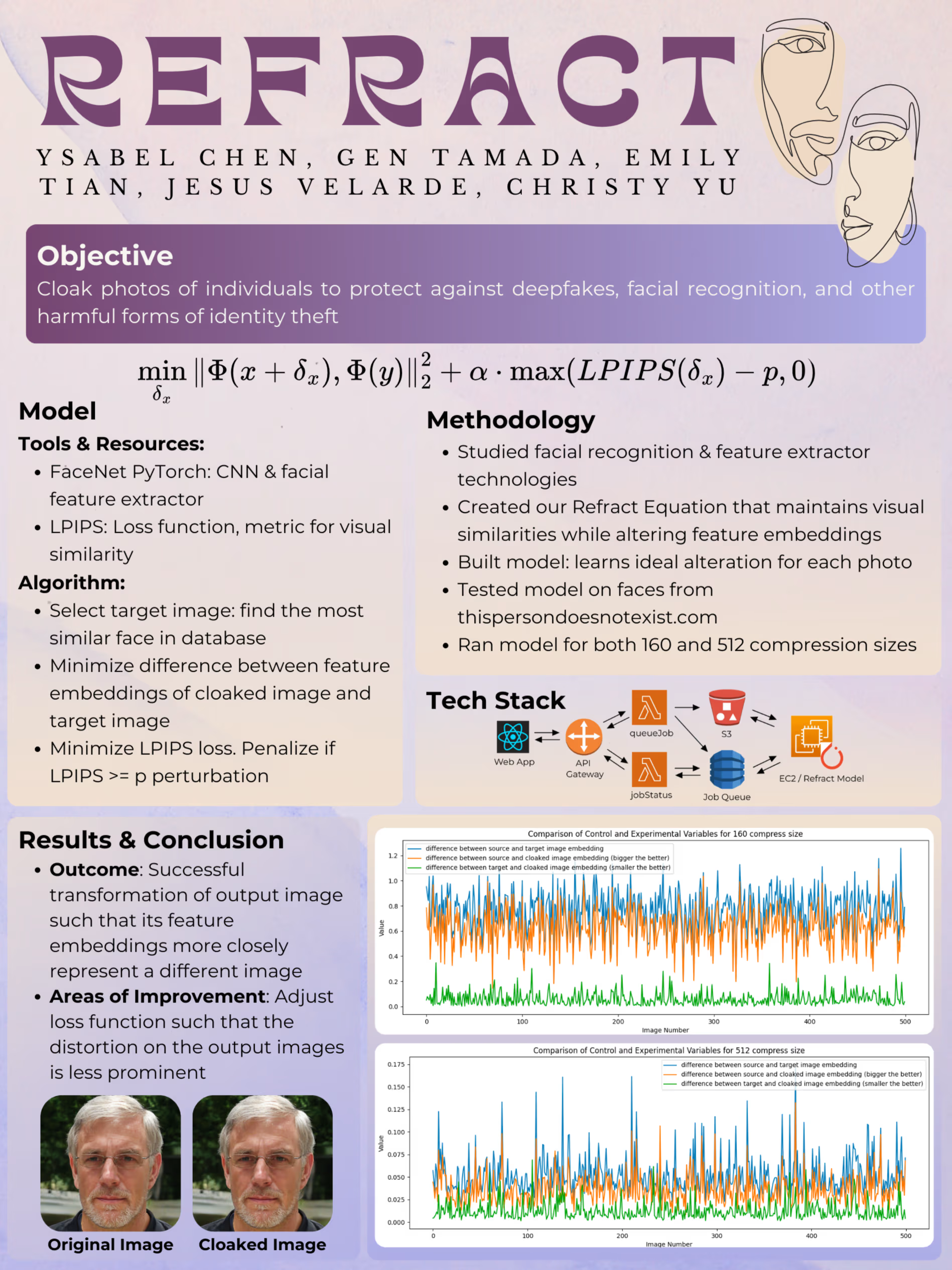
Method: Optimizing to minimize visual difference (L2 norm) and maximize embedding difference (LPIPS)
Inspired by Glaze, which protects artists' styles by encoding embeddings of a different one in their work, our version does the same thing to a face. The model picks a different face from our database and cloaks the original with a thin layer of that face's feature embeddings, tuned so the source looks like the target to a machine and unchanged to a person.
Scraping real faces without consent was against the nature of this project, so we generated 500 faces from thispersondoesnotexist.com to train the model for our data.
I wrote Python scripts that:
- scraped for the 500 face database
- pulled feature embeddings with Hugging Face
- searched and picked the target face with most similar embeddings to the original
03 Interface
Visual branding and learning TypeScript
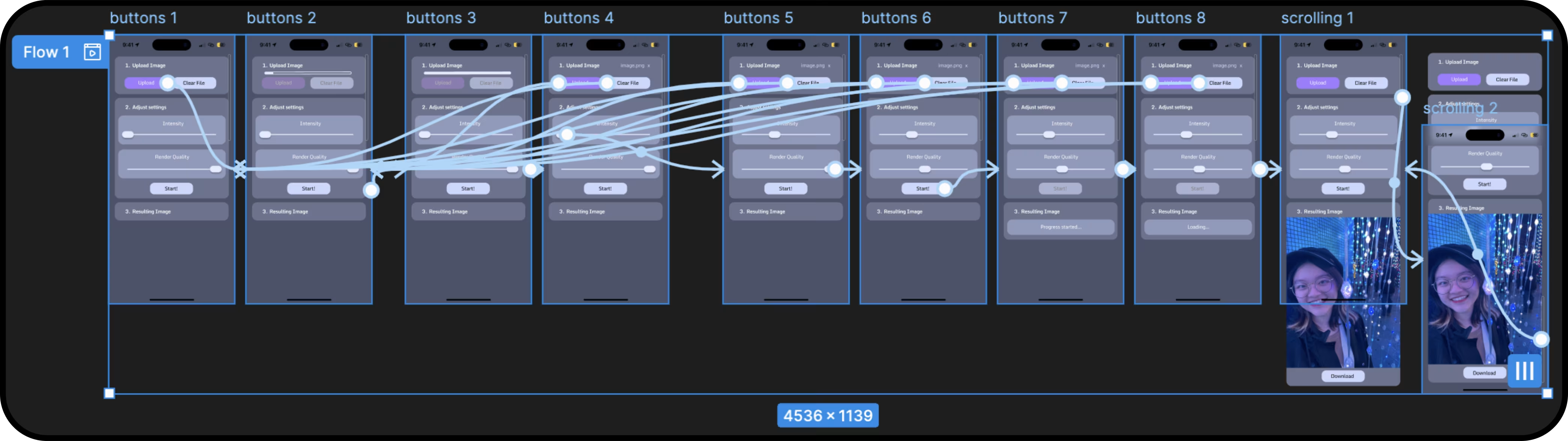
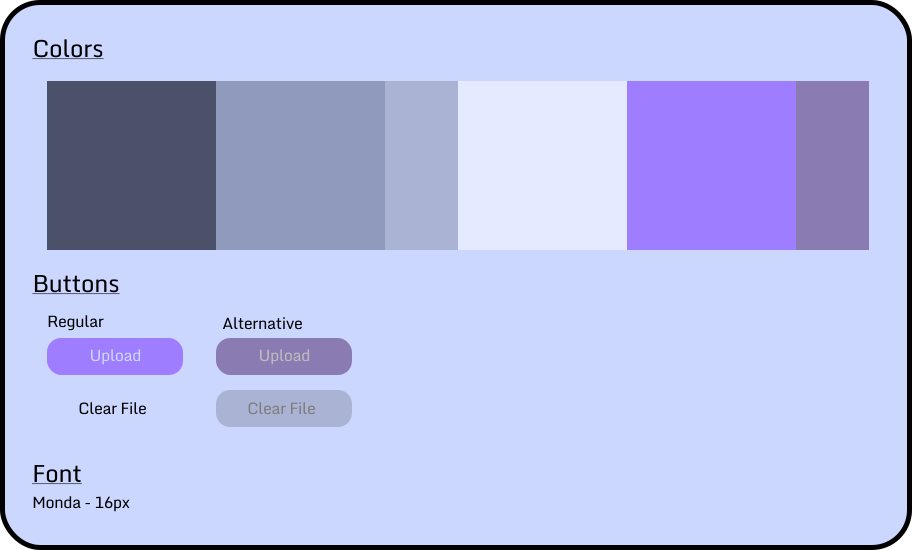
I worked with another member on the branding colour and typography. We built the system in Figma, then implemented the front-end. It was my first time writing TypeScript, and I learned a lot about React here.
04 Results
2.56× more effective at fooling deepfake models
- 75.67%
- Cloaked image similarity to the target face
- 29.57%
- Cloaked image similarity to the original face
- 2.56×
- More effective at fooling deepfake models
 Original
 Cloaked
05 Impact
Make the data cheap to take and worthless to have
Most people have posted a photograph of their face somewhere public, which means most people are already in the training data of something. Refract is small, but it points at the right defence: make the thing scrapers want cheap to take and worthless to have.