2025Design Frameworks, UX Research, AI Ethics
Artists vs AI
Research with ten Instagram artists on protecting their work from generative AI.
Generative AI content overshadows the original work of small Instagram artists, and the artists fight art theft on their own. My team interviewed ten of them and turned 202 interpretation notes into five directions Instagram could act on.
- Role
- UX Researcher
- Team
- Soyon Kim, Erica Flora Yu, Esther Suh, Elise Zur, Christy Yu
- Method
- Contextual interviews and directed storytelling
- Sample
- 10 Instagram artists under 10k followers
- Links
- Read the zine
01 The problem
Generative AI content overshadows small artists' work on Instagram
Small Instagram artists post original work into feeds full of generative AI content. The artists we interviewed struggled to protect their artistic identity and dealt with art theft on their own.
02 Methods
We asked ten artists to recall real moments with AI
We looked for what artists feel about AI but might not consciously express, so we asked about specific events.
Contextual interviews
We ran 45 to 60 minute interviews on how artists feel about generative AI in different contexts. We recruited through our personal networks in the artist community.
Ten artists
Ten Instagram artists under 10k followers, each active for the previous six months: illustrators, digital painters, animators and mixed-media artists.
Directed storytelling
We asked participants to recall specific moments with generative AI. Real events drew out their honest emotions, behaviors and decisions.
We wrote 202 interpretation notes from the interviews and sorted them through affinity clustering. Then we built an empathy map and a cultural model to read the data from new perspectives.
03 Insights
Artists want Instagram to take over policing AI content
We found five insights. Each pairs an artist's words with what a platform could do about them.
I struggle to tell and you have to start zooming in to see the details, and then you feel bad, because what if it [has] been made by real artists? … It's a bit disheartening.
One artist zooms in on posts to check whether a person made them, and finds the doubt disheartening. Platforms and AI tools should disclose by default when content is AI-generated or trained on a specific artist's work, so the system prevents infringement and artists can stop policing it.
People think of AI with black & white thinking, but there's the gray area as well… I don't know if I have a platform to share this opinion.
Two artists hide nuanced views on AI and take black-and-white positions in public. Many see practical uses for AI in ideation or non-creative tasks, and fear the social cost of saying so. The polarized debate keeps artists from discussing responsible ways to use AI.
Humans are responsible for making sure AI doesn't take over artistic standards.
This artist holds people responsible for what AI does to art. Instagram can take on that responsibility with clear platform-wide rules for AI use: what to disclose, and what is and isn't allowed.
…you can see what used to be a signature or what used to be a watermark in the corner of an image…
One artist considered adding watermarks to catch AI copies, since generated images mimic the signatures of human artists. Defending their work alone leaves artists feeling they have lost the agency to protect it. If Instagram made AI origin visible, enforceable and easy to filter, artists could share their work with confidence again.
With the age of AI, I need to argue more to people who are unable to understand the beauty of human-crafted products, ideas, and artwork.
Artists enjoyed sharing and learning the behind-the-scenes details of a piece, as markers of human authenticity. Viewers feel less connected to art when they can't see the human effort behind it, so platforms should protect that story and show it.
04 Directions
We proposed five ways Instagram could protect and support artists
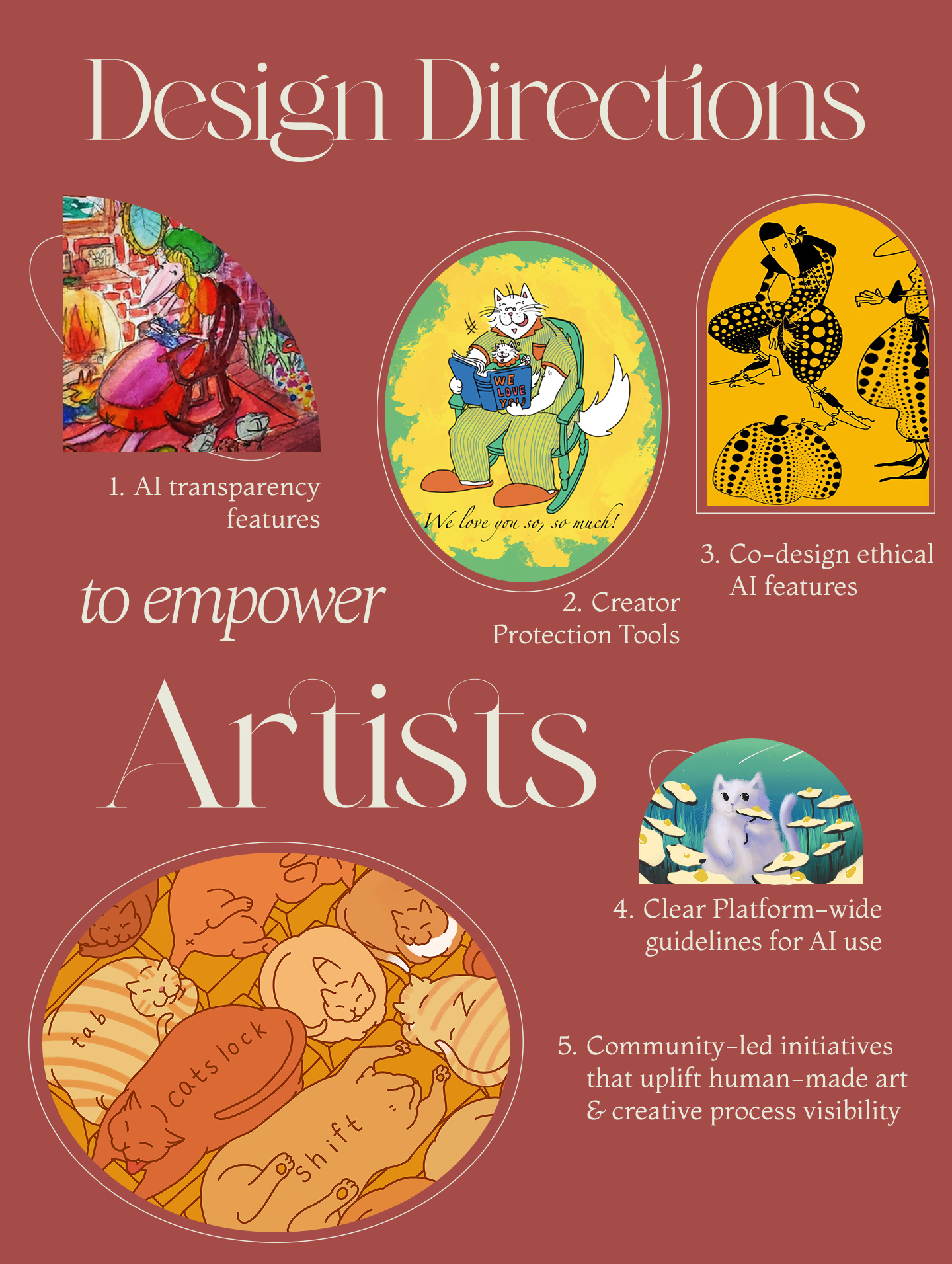
- Invest in AI transparency features that show how models use an artist's content, with labels such as "no training" and "opt-in collection".
- Build creator protection tools, such as style protection, watermarking, or blocking model scraping.
- Pilot AI features with small artist groups to co-design ethical creative tools for ideation and moodboarding.
- Define clear platform-wide guidelines for AI use, including what to disclose and what is and isn't allowed.
- Support community-led initiatives that make human-made art, and the process behind it, more visible.