In a digital space increasingly shaped by AI...
How can we protect Instagram artists' IP?
User Centered Research & Eval team: SOYON KIM, ERICA FLORA YU, ESTHER SUH, ELISE ZUR, CHRISTY YU
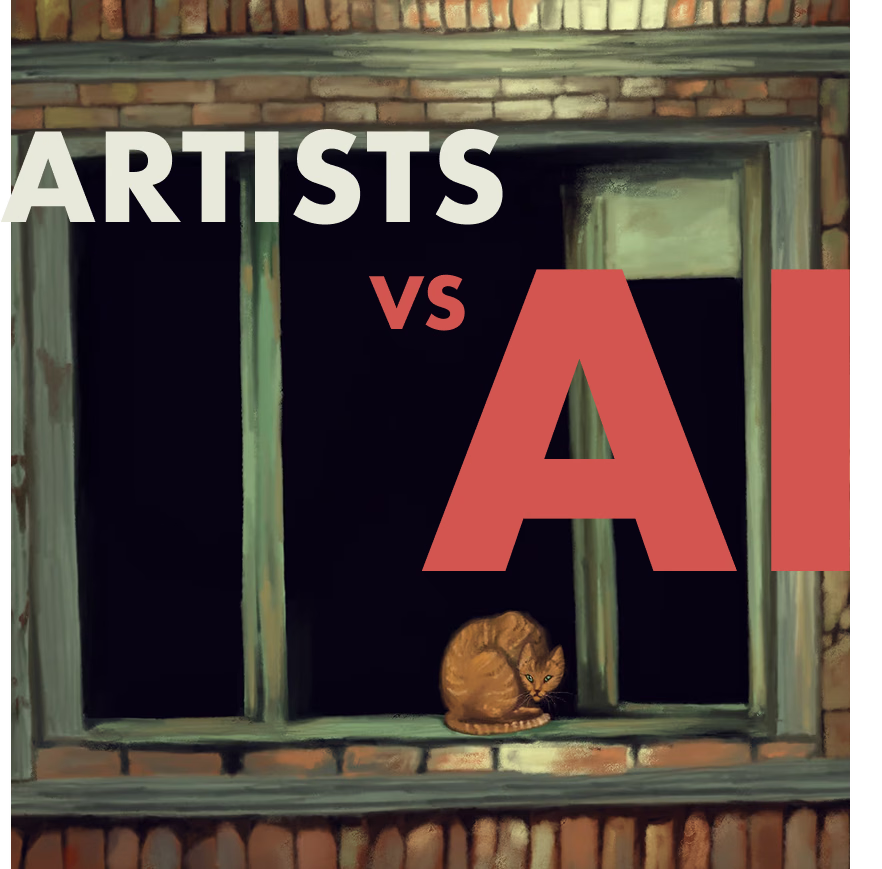

Small Instagram artists original work are overshadowed by generative AI content. Many artists struggle to protect their artistic identity and deal with art theft online.
empower small Instagram artists to regain control, maintain credit, and benefit from their creativity in the age of Generative AI?

We conducted 45-60 minute contextual interviews to understand how artists feel about generative AI in various contexts. Recruitment of our participants was conducted through personal networks within the artist community.
We met with 10 small Instagram artists (under 10k followers) who have been consistently active in the past 6 months. Our sample of artists included a mix of illustrators, digital painters, animators, and mixed-media artists.
We gathered first-person narratives by prompting our participants to recall specific moments related to generative AI. Focusing on real events helped us uncover their honest emotions, behaviors, and decision-making patterns.
From our artist interviews, we accumulated 202 interpretation notes, which we then synthesized through affinity clustering. We created an empathy map and a cultural model to visualize trends and guide us to view our data from new perspectives.
What artists feel but might not consciously express.
Emotional and ethical nuances artists feel about AI.
How AI impacts their social media performance and interactions.

"Ever so often you come across one, and it's like, I struggle to tell and you have to start zooming in to see the details, and then you feel bad, because what if it is has been made by real artists? And you're here questioning whether it's not it. It's a bit disheartening."
One artist noted zooming in to check if artwork on Instagram is human-made, finding it disheartening to question. Platforms and AI tools should automatically disclose when content is AI-generated or trained on specific artists' work, shifting responsibility from artists having to police infringement to systems preventing it by default.
"People think of AI with black & white thinking, but there's the gray area [when it comes to thinking of AI] as well… I don't know if I have a platform to share this [gray area] opinion."
Multiple artists (A1, A10) hide their nuanced AI opinions, feeling they must present black-and-white views publicly while holding more complex perspectives privately. The current polarized discourse forces people into camps they don't fully inhabit. Many artists see practical uses for AI in ideation or non-creative tasks but fear social consequences for admitting this, preventing productive conversations about responsible AI integration.
"Humans are responsible for making sure AI doesn't take over artistic standards."
Multiple artists (A1, A10) hide their nuanced AI opinions, feeling they must present black-and-white views publicly while holding more complex perspectives privately. The current polarized discourse forces people into camps they don't fully inhabit. Many artists see practical uses for AI in ideation or non-creative tasks but fear social consequences for admitting this, preventing productive conversations about responsible AI integration.
"Quite often you come across images that AI generated, and it you can see what used to be a signature or what used to be a watermark in the corner of an image that sort of proves its constraint from another artist."
An artist considered adding watermarks as a way to catch AI “slop” because AI-generated images try to mimic signatures of human creators. The ongoing pursuit of individual self-protection measures lead artists to feel that they no longer have the agency to protect their work. Making AI originations visible, enforceable, and simple to filter systemically can help restore their confidence in sharing their art to the world.
"With the age of AI, I need to argue more to people who are unable to understand the beauty of human-crafted products, ideas, and artwork."
These artists expressed delight at sharing and learning the small behind-the-scenes details about the artwork -- almost as markers of human authenticity. Protecting and highlighting the human story and effort behind art is crucial because the emotional connection to art diminishes if human effort is obscured or undervalued.

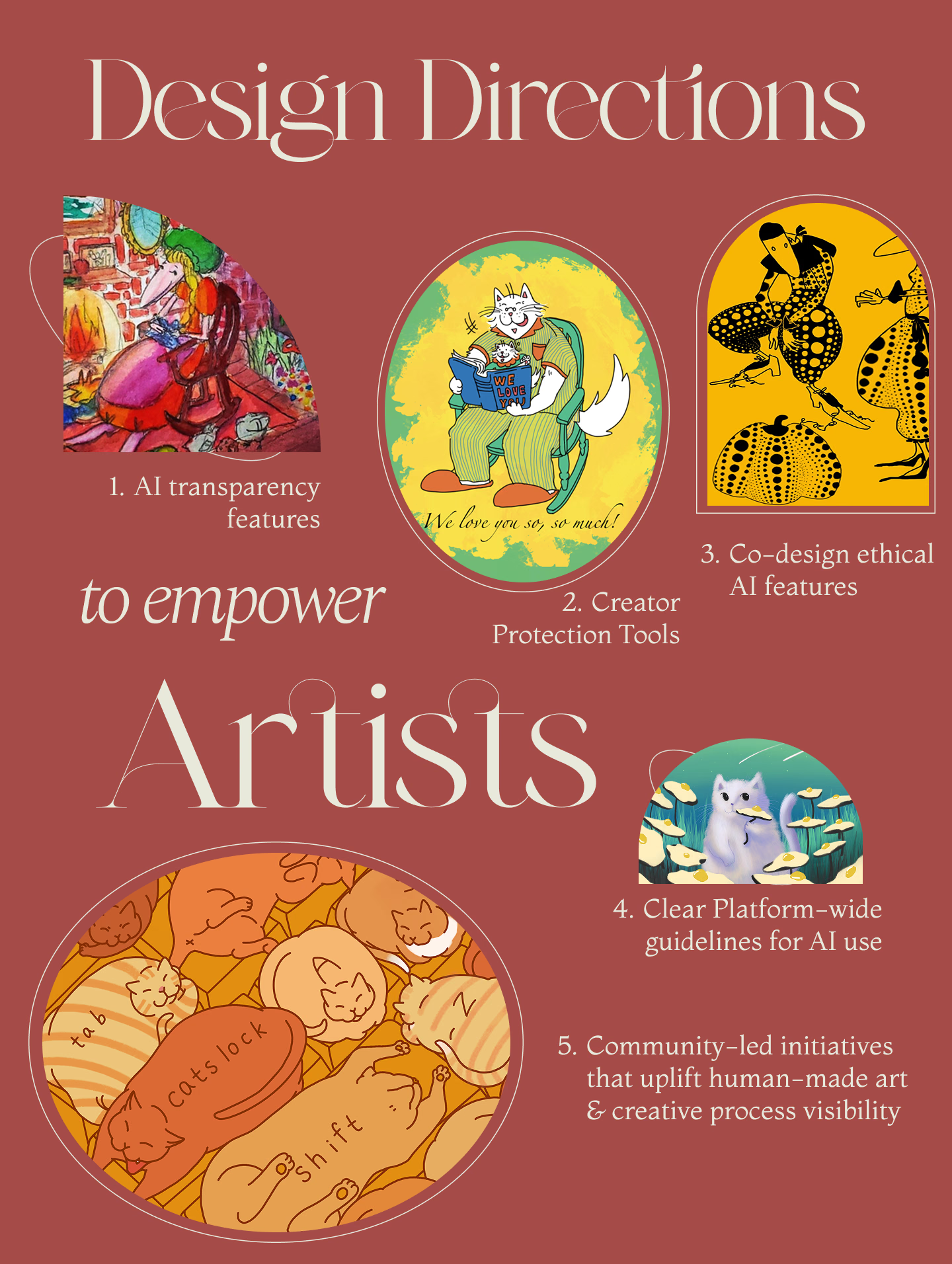
Invest in AI transparency features that clearly communicate how models interact with artists’ content (e.g., “no training,” “opt-in collection”).
Build creator protection tools, such as style protection, watermarking, or blocking model scraping.
Pilot AI features with small artist groups to co-design ethical creative tools around ideation and moodboarding.
Define clear platform-wide guidelines for AI use (e.g., disclosure expectations, what is and isn’t allowed).
Support community-led initiatives that uplift human-made art and creative process visibility.

Hit me up!